Awards › Guides › Getting started
Getting started
How to Start a Food Diary: Your First Fourteen Days
The first two weeks of food tracking decide whether it sticks. Spend week one logging honestly without changing anything, and week two building the shortcuts that make logging quick. Only then start adjusting what you eat.
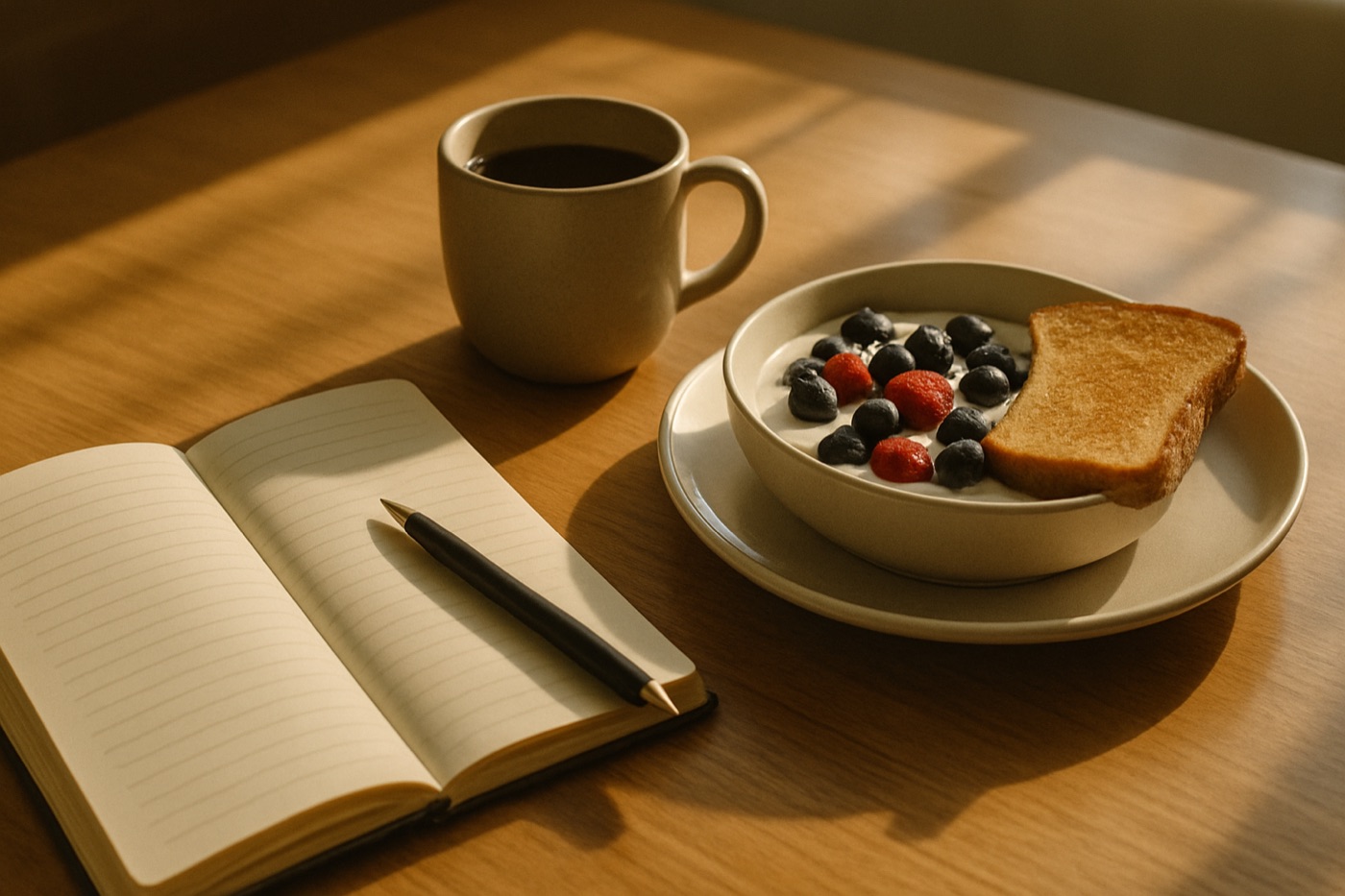
Starting a food diary is easy. Keeping one is not. Most people who give up do so in the first fortnight, usually because they tried to do two hard things at once: learn a new habit and change their diet. The plan below separates them.
Before day one
Spend ten minutes on setup and no more.
- Choose one app and install it. Do not trial three at once; your history will end up in pieces. Our guide to choosing an app has a quick checklist.
- Enter your details and goal. Accept the suggested targets for now; you can refine them later.
- Turn on one reminder, at the time you are most likely to forget, often mid-afternoon or after dinner.
- If you have a kitchen scale, put it somewhere visible. If you do not, that is fine; see our guide to portions without a scale.
Week one: log honestly, change nothing
The goal of the first week is information. You are finding out what you actually eat, which is usually different from what you think you eat.
Days 1 to 3: log everything, as it happens. Every meal, snack, drink and bite. Log as soon as you eat, or even before, because memory is surprisingly poor by the evening. Do not worry about precision yet. A rough entry is better than none.
Days 4 and 5: notice the gaps. Look back at your entries. Did you miss drinks, cooking oil, sauces, the tastes while cooking, the biscuit in a meeting? These are the items people forget most. Start including them.
Days 6 and 7: include the weekend. Weekends are where most diaries fall apart and where most of the surprises are. Log them as carefully as a weekday.
At the end of week one, look at your average day, not your best or worst. That is your real starting point.
Week two: build the shortcuts
The second week is about making logging fast, so it can last.
- Save your regular meals. Most people eat the same handful of breakfasts and lunches. Saving them turns a five-step entry into one tap.
- Build your recipes once. Enter the dinners you cook often as recipes, with the number of portions. Our guide to logging home cooking shows how.
- Use the fastest method for each meal. Scan packets, photograph mixed plates, say drinks out loud if your app supports it.
- Pick a daily review time. Two minutes before bed to check the day is complete.
By the end of the second week, most people can log an ordinary day in five minutes or less.
What to expect in the numbers
| Day | What usually happens |
|---|---|
| 1–3 | Logging is slow; totals look surprisingly high or low |
| 4–5 | Missing items (drinks, oil, extras) start appearing; totals rise |
| 6–7 | The weekend shows up as different from weekdays |
| 8–10 | Saved meals make logging noticeably faster |
| 11–14 | A clear picture of your typical day emerges |
Common first-fortnight problems
“I keep forgetting.” Log before you eat instead of after. Put the app on your home screen. Use one well-timed reminder rather than five.
“It takes too long.” Save meals and recipes. Use barcodes. Accept estimates for meals you cannot measure.
“The numbers upset me.” That is common and worth taking seriously. The first week is information, not a verdict. If tracking makes you anxious about food, read our guide to tracking without counting calories, and talk to a professional if the feelings persist.
“I had a bad day.” Log it anyway. A diary that only contains good days is not a diary.
After day fourteen
Now you have a realistic picture of your eating and a fast way to record it. This is the moment to make changes, one at a time: perhaps more protein at breakfast, a smaller portion of one dense food, or a vegetable added to dinner. Give each change two weeks before judging it.
The short version
- Set up in ten minutes.
- Week one: log everything, change nothing.
- Week two: save meals, build recipes, find your fastest methods.
- Then change one thing at a time.
Quick answers
How do I start tracking my food?
Pick one app, set it up in five minutes, and spend the first week logging everything you eat and drink without trying to change it. In the second week, save your regular meals and recipes so logging gets faster. Start making changes only after that.
Should I change my diet in the first week of tracking?
No. The first week is for finding out what you really eat. Changing it at the same time makes it harder to see where the calories and nutrients come from, and it makes the new habit harder to keep.
What if I forget to log a meal?
Log your best estimate as soon as you remember and move on. A rough entry is far more useful than a gap, and one missed meal does not spoil a week.
Keep reading
How to Choose a Food Tracking App You Will Actually Keep Using
Getting started
What Makes Good Food Data? Verified, Crowd-Sourced and Lab-Analysed Entries Explained
Getting started
How to Log Home-Cooked Meals Without Spending All Evening on It
Logging skills
How to Log Restaurant Meals Without Guessing Wildly
Logging skills