Awards › Guides › For your situation
For your situation
Food Tracking With Diabetes: Carb Counting Basics and Working With Your Care Team
For many people with diabetes, a food diary is mainly a carbohydrate diary. Learn to count carbohydrates in grams, keep meals consistent, log glucose readings beside your meals if you measure them, and set every target with your diabetes care team.
This guide is general information, not medical advice. If you have diabetes, especially if you use insulin or medicines that can cause low blood sugar, set your targets and make changes with your diabetes care team.
For many people with diabetes, carbohydrate is the part of food that affects blood glucose most directly. That makes a food diary a useful tool: it shows how much carbohydrate you eat, when, and, if you measure your glucose, how your readings sit alongside your meals.
Carb counting in grams
Carbohydrate counting means adding up the grams of carbohydrate in what you eat. Food trackers do the arithmetic once you log the right food and portion.
- On a label, use total carbohydrate per serving, and adjust for the amount you actually eat. Our guide to reading labels shows how.
- Carb choices. Some people count in “choices” of about 15 g of carbohydrate each, roughly a small piece of fruit or a slice of bread. Grams are more precise; choices are quicker.
- Fiber is a carbohydrate the body largely does not digest. Whether to subtract it is a question for your care team, especially if you dose insulin by carbohydrate.
The plate method
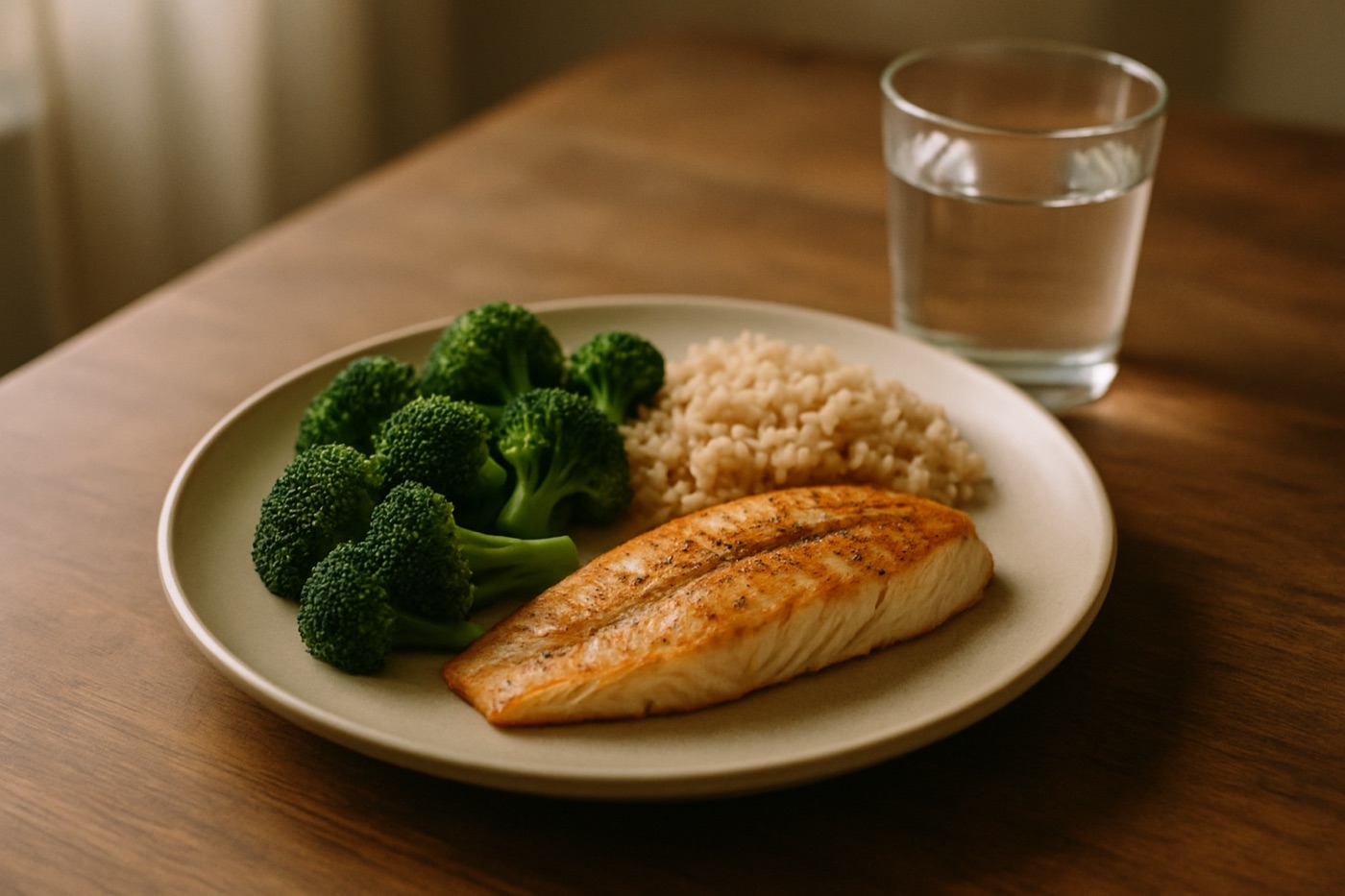
If counting every gram feels like too much, the plate method used in diabetes education is a simpler start: fill half the plate with non-starchy vegetables, a quarter with lean protein and a quarter with carbohydrate foods such as whole grains, beans or starchy vegetables, with water or a zero-calorie drink.
What to log
| Log | Why |
|---|---|
| Every meal and snack, with carbohydrate grams | The core of carb counting |
| The time you eat | Timing matters for glucose and medication |
| Glucose readings, if you take them | To see readings beside meals over time |
| Physical activity | Activity can lower glucose |
| Drinks, including juice and alcohol | Both can affect glucose substantially |
Some food trackers can record glucose readings, typed in or synced from your meter or sensor app through Apple Health or Health Connect, and show them on the same timeline as your meals. That makes patterns easier to discuss at appointments. The meter or sensor app remains the source of truth, and the tracker does not interpret readings for you.
Consistency helps
Many people find it easier to manage glucose when meals contain similar amounts of carbohydrate from day to day. Saved meals in a tracker make that consistency easier: your usual breakfast with its known carbohydrate count is one tap.
Weight loss and diabetes
Losing weight can improve glucose control for many people with type 2 diabetes. If you take insulin or medicines that can cause hypoglycaemia, eating less can change what you need, so plan any calorie deficit with your care team rather than on your own.
What a tracker cannot do
A food tracker does not diagnose, predict your glucose, adjust your medication or replace your meter or continuous glucose monitor. Use it as a clear record to bring to appointments.
The bottom line
Count carbohydrate in grams or choices, keep meals consistent, log the time and, if you measure them, your glucose readings, and agree every target with your diabetes care team.
Quick answers
How many carbs should a person with diabetes eat?
There is no single number. Carbohydrate targets depend on your medication, activity, preferences and glucose goals, and should be set with your doctor, diabetes educator or registered dietitian.
What is a carb choice?
One carbohydrate choice is about 15 g of carbohydrate, roughly a small piece of fruit or a slice of bread. Some people count in choices, others in grams; grams are more precise.
Can a food tracking app replace my glucose meter or diabetes plan?
No. A food tracker is a record. It does not diagnose, set treatment or replace your meter, continuous glucose monitor or the plan agreed with your care team.
Keep reading
Food Tracking for Vegetarians and Vegans: What to Watch Beyond Calories
For your situation
Food Tracking for Strength Training: Protein, Surpluses and Cuts
For your situation
How to Choose a Food Tracking App You Will Actually Keep Using
Getting started
How to Start a Food Diary: Your First Fourteen Days
Getting started