Awards › Guides › Nutrition basics
Nutrition basics
Micronutrients Worth Watching: The Vitamins and Minerals Many Diets Miss
Most people do not need to track every vitamin. The US Dietary Guidelines name four nutrients many Americans under-consume: calcium, potassium, fiber and vitamin D. Add iron, B12 and folate for some groups, and keep an eye on sodium in the other direction.
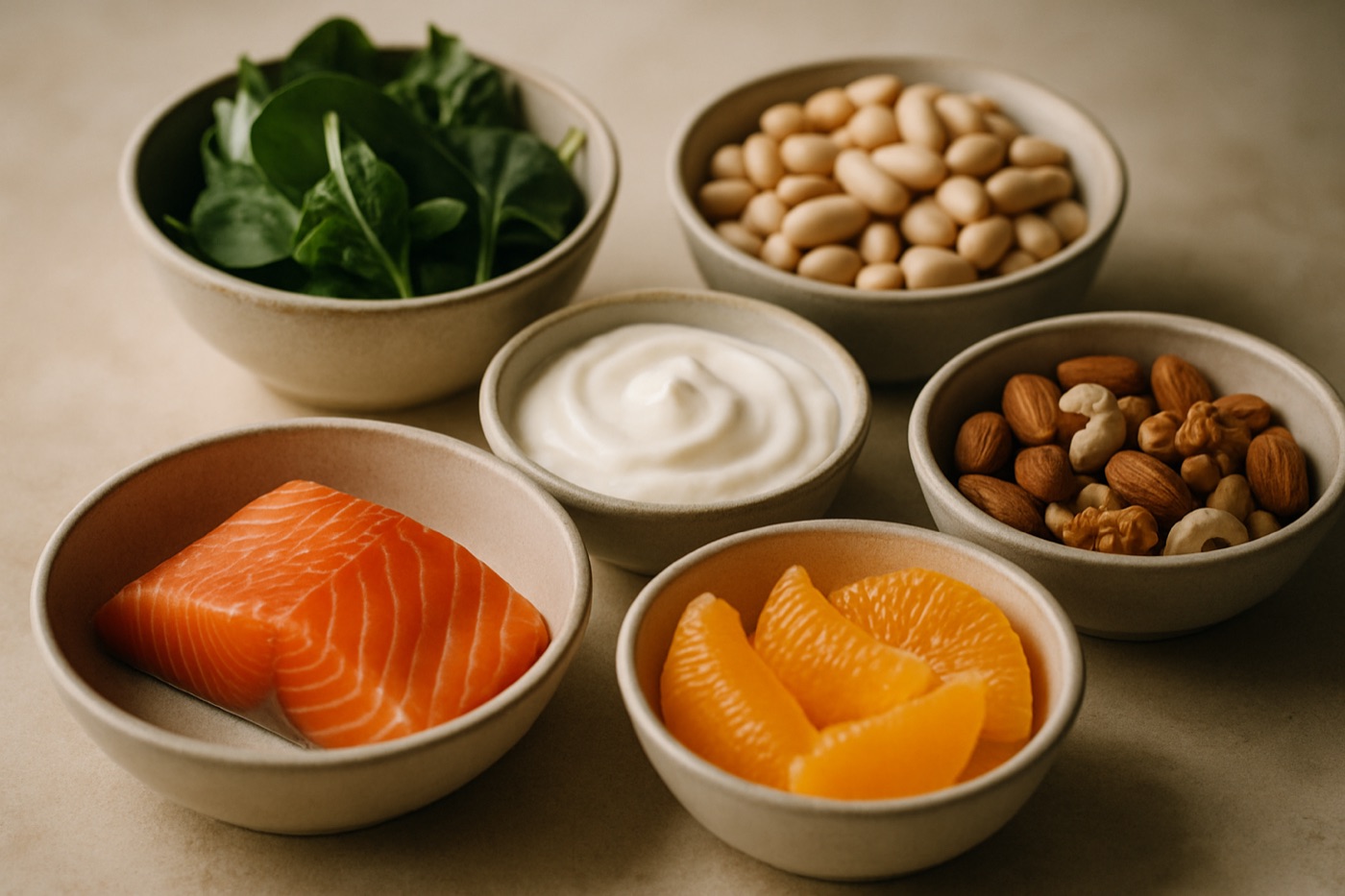
Food trackers can show dozens of vitamins and minerals, and the long list can feel overwhelming. You do not need to watch them all. A handful are under-eaten by many people, a few matter for particular diets or life stages, and one, sodium, is usually over-eaten.
The four the Dietary Guidelines flag
The Dietary Guidelines for Americans name four nutrients of public health concern because many people do not get enough:
| Nutrient | Adult target (typical) | Good sources |
|---|---|---|
| Fiber | About 14 g per 1,000 calories (roughly 25 g for women, 38 g for men aged 19–50) | Beans, lentils, whole grains, vegetables, fruit, nuts |
| Calcium | 1,000 mg a day for most adults; 1,200 mg for women over 50 and everyone over 70 | Dairy, fortified plant milks, tofu set with calcium, leafy greens |
| Potassium | 2,600 mg (women) and 3,400 mg (men) a day | Beans, potatoes, bananas, yogurt, leafy greens, tomatoes |
| Vitamin D | 15 µg (600 IU) a day up to age 70; 20 µg (800 IU) over 70 | Oily fish, fortified foods, eggs; sunlight |
If your tracker shows these, they are the most useful four to glance at weekly.
Nutrients that matter for particular groups
- Iron. The recommended intake is 18 mg a day for women aged 19 to 50 and 8 mg for men and older women. People who menstruate, are pregnant or eat no meat are more likely to fall short. Iron from plants is absorbed less well; vitamin C in the same meal helps.
- Vitamin B12. 2.4 µg a day for adults. It is found naturally almost only in animal foods, so vegans need fortified foods or a supplement, and absorption falls with age.
- Folate. 400 µg a day for most adults, and more during pregnancy; people who could become pregnant are usually advised to take folic acid.
- Magnesium. About 310 to 320 mg a day for women and 400 to 420 mg for men. Nuts, seeds, whole grains, beans and leafy greens are good sources.
- Iodine. 150 µg a day for adults; iodised salt, dairy and seafood are the main sources.
The one to watch in the other direction
Sodium. US guidance is to stay below 2,300 mg a day. Most of the sodium people eat comes from packaged and restaurant food rather than the salt shaker. On European labels, salt is listed instead of sodium: salt is about 2.5 times the sodium figure, so 6 g of salt is about 2,400 mg of sodium.
How to use a tracker for micronutrients
- Log for at least a week before drawing conclusions. Single days vary a lot.
- Check that your entries include micronutrients. User-entered foods often list only calories and macros, so a blank can show up as zero. Our guide to good food data explains why.
- Look at weekly averages, not daily totals.
- Change food before you add supplements. A daily portion of beans, a handful of nuts or a yogurt can shift several numbers at once.
- Talk to a professional before supplementing, especially iron and vitamin D, which can be harmful in excess.
The bottom line
Watch fiber, calcium, potassium and vitamin D; keep sodium under control; and pay attention to iron, B12 and folate if they apply to you. A tracker is a good way to spot patterns, and a clinician is the right person to interpret them.
Targets are US Dietary Reference Intakes for healthy adults; your needs may differ.
Quick answers
Which nutrients do most people not get enough of?
The Dietary Guidelines for Americans identify calcium, potassium, dietary fiber and vitamin D as nutrients of public health concern because many people under-consume them. Iron is also a concern for some groups, including people who menstruate.
How much sodium should I have a day?
US guidance is to keep sodium below 2,300 mg a day for adults. Most people eat more than that, largely from packaged and restaurant foods.
Should I take supplements based on my food tracker?
Use the tracker to spot a pattern, then talk to a doctor or registered dietitian before supplementing. Some nutrients, such as iron and vitamin D, can be harmful in excess, and blood tests may be needed.
Keep reading
Macronutrients Explained: Protein, Carbohydrate, Fat and Where Calories Come From
Nutrition basics
Energy Balance Basics: How Calories In and Calories Out Really Work
Nutrition basics
How to Choose a Food Tracking App You Will Actually Keep Using
Getting started
How to Start a Food Diary: Your First Fourteen Days
Getting started